The Night the Bench Was Best
In Game 6 of the '92 Finals, an unlikely quintet led the greatest comeback in Finals history.
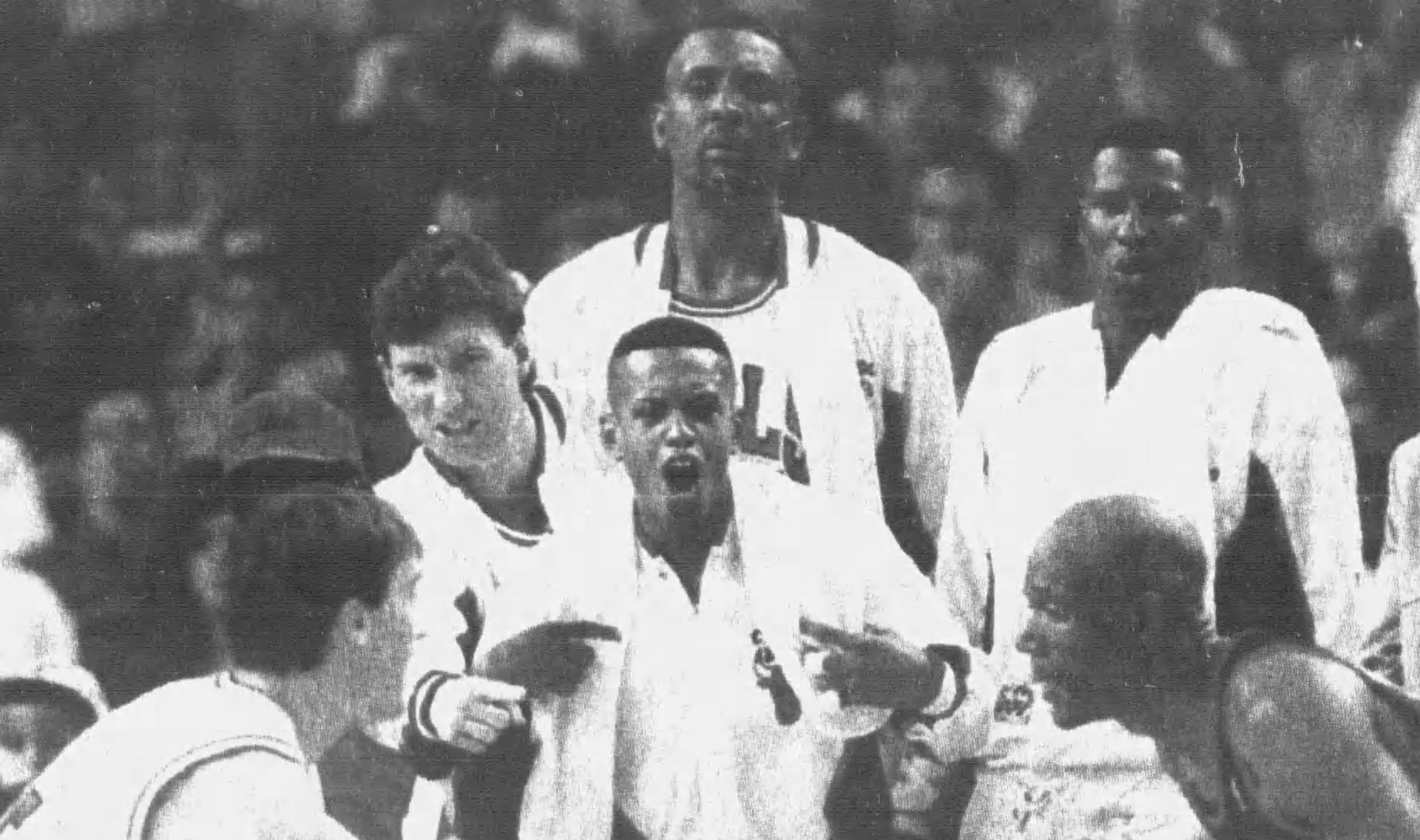
I thought we were going to Game 7. That’s what it looked like. When a sluggish Bulls team fell behind by 17 points late in the 3rd, and took the floor to start the 4th down 15 with a lineup of Scottie Pippen and four guys off the bench, I thought we’d fight gamely, and fail, and go to Game 7 three nights later, and win.
The championship would be ours again — just not tonight.
This, it turned out, would be the most doubt I would ever place upon the Bulls in the NBA Finals in all six seasons, and 28 years later, I still remember how gleeful I was to be wrong. Game 6 of the 1992 NBA Finals was at the time, and remains today, one of my favorite moments as a Chicago sports fan.
Between NBC Sports Chicago replaying the ‘96 playoffs in full and the forthcoming 10-part ESPN documentary about 1998, we’re spending a lot of time right now celebrating the second three-peat. And man, don’t get me wrong: I love the second three-peat.
But the level of personal connection that I felt with the first three-peat was deeply important to me as a Bulls fan, and still is. A huge reason for that is what we overcame to reach that peak — namely, our battles with the Pistons. More broadly though, we saw that first three-peat team grow up, and grow into the championship club we all adored. There was a we-knew-them-when feel to the first three-peat that was absent with the second.
That feeling was locked in during those 12 wonderful minutes at Chicago Stadium, when an unlikely quintet pulled our Bulls back from the brink of Game 7 and gave Chicago fans their first home championship in almost 30 years.
Come back with me, then, to one of the greatest nights in Chicago sports history: June 14, 1992 — the comeback.
Each of the six championships gave fans something different, and what was cool about 1992 was that it was simultaneously a powerhouse season and one of deep struggle. On the one hand, we set a franchise record with 67 wins, Scottie became an All-Star starter, MJ became the first player ever to win both the MVP and Finals MVP in consecutive seasons, Horace posted career highs in points and rebounds. Everything clicked.
On the other hand, MJ’s gambling troubles started, The Jordan Rules rocked the locker room and player jealousies peaked. We were a juggernaut, yet the Knicks took his 7 games in the second round, and the Cavs took us 6 in the East Finals.
Hell, the night before Game 5 of the Finals, with the Bulls and Blazers tied 2-2, Tribune columnist Bob Greene asked MJ if the Bulls could win the series.
“I really don’t know,” Jordan said.
We won Game 5 in Portland — Jordan scored 46 — and the trip home felt like destiny. At last, a chance to win the title at home, after the 5-game romp that ended in L.A. the year before.
But whether that destiny would be fulfilled in Game 6 or Game 7 remained uncertain. I certainly thought Game 6 would be it; I watched it at my friend Julian’s house, and I remember he and I were in such good spirits at halftime — even with the Bulls trailing 50-44 — that we went to his basement and played one-on-one on his breakaway mini-rim, and nearly forgot about the game. I felt so confident in the Bulls at that moment, and I was having such fun imagining myself as them, that truly, I thought title #2 was in the bag.
Then we came out and lost the 3rd quarter by nine.
When the 4th quarter started, we trailed 79-64. We took the floor with MJ on the bench and these guys on the floor: B.J. Armstrong, Bobby Hansen, Scottie Pippen, Stacey King and Scott Williams.
In retrospect, of course, this was perfect. While 1991 felt like a celebration of the starters, 1992 felt like the coronation of the bench. In the ‘91 Finals, all five starters averaged 30 minutes a night — Good News Cliff’s 18 minutes a night led all reserves.
1992 was where the bench expanded. Where 1993 starter B.J. Armstrong took the trajectory toward that starting role. Where 1993 close-out man Scott Williams felt locked in as the crunch-time 5. B.J., Tank, King and Hansen were at the heart of what became the greatest 4th quarter comeback in NBA Finals history (passing the Warriors’ 12-point comeback in 1967), with Scottie Pippen the anchor of it all.
“If you go back and look at the way we played, Phil was very methodical in how he substituted guys,” Will Perdue told me recently when I spoke with him about my piece on MJ’s return from baseball. “Scottie was always the first guy out. So when the second quarter started, he was the only starter on the floor. And then basically after about the five-minute mark of the second quarter, the starters would slowly start coming back in.”
Even to fans, this was a recognizable occurrence during the first three-peat — “like clockwork,” Perdue noted. But when Phil sent Pip, B.J., Hansen, King and Williams on the floor to start the 4th quarter of the biggest game of the season, I didn’t view it as anything as dependable as clockwork. I thought it was either one of Phil’s mind games, or merely an opportunity to rest MJ for the remainder of the game, until Game 7.
Hansen’s presence, in particular, made me feel as if something was very wrong. He was the 12th man, and here he was on the floor at the season’s most crucial juncture.
“Phil told us, we need to get momentum back,” Hansen said later. “We had nothing to lose.”
It was Hansen who got things rolling. Just 30 seconds into the 4th, Portland left the veteran guard open in the corner. In what would be his final NBA game, on what would be his final NBA shot, Bobby Hansen drilled a three to get the Bulls back to 12. It was his only points of the game.
“But what three points,” Pippen said later. “It really picked us up.”
Hansen was not finished. On the next possession, he came up with a steal, which the Bulls converted into three points, first with a free throw by King when he was fouled hard by Jerome Kersey, drawing a flagrant foul, and then on a bank shot by Pippen on the ensuring possession.
“It was gut-check time, and Phil put our quick lineup out there,” King said after the game. “It was our job to hustle — to claw our way back.”
This was a beautiful moment. Everyone contributed. After a Portland bucket, King hit another two free throws, and then Scottie got another jumper. The Bulls started blocking shots and forcing turnovers. The camera kept cutting to Jordan on the bench, towels draped on his shoulders, fist-pumping with every bucket. The energy at the Stadium turned. The crowd awakened. There was a timeout, and Phil kept the lineup. Sent them all back out there. Believed in them. Gave them their shot.
A Stacey King jumper got the Bulls within three — 81-78 — and when Portland called timeout, Jordan and Horace Grant were cheering like they’d won the title, high-fiving their less heralded teammates.
And then, just like the clockwork Perdue told me about, Phil called in the closers. Jordan replaced Hansen with about 8:30 to play.
“Take over, Michael,” Hansen whispered to him. “Take us home.”
“We’re going to get you a ring,” Jordan replied.
Jordan went on a tear, with a steal and a bucket. Paxson replaced Armstrong. Grant replaced King. Everybody contributed. The Bulls shot 13 of 16 from the floor in the 4th quarter, with Jordan (12 points) and Pippen (11 points) going a combined 10-10 from the floor, 1-1 from 3 and 2-2 from the line. Jordan had two steals, Pippen had one. Scott Williams led the Bulls with two blocks and three rebounds. King had five points. Pippen, Paxson and King forced Portland turnovers. B.J. and Hansen got clutch buckets. And Horace won a key jump ball.
Throw in Cliff Levingston’s high-energy contribution earlier in the game, and the bench performance was as deep as it was brilliant: five guys, all scoring, delivering a combined 19 points, 13 rebounds, five assists, two steals, two blocks — and one comeback for the ages.
The final rebound ended up in Paxson’s hands and the celebration began: Bulls 97, Blazers 93. Scott Williams still on the floor, representing the bench.
Championship #2 in the bag.
The team ran into the locker room, with Hansen, the surprise hero, holding the game ball. They celebrated together, but this was the city’s first home championship since the ‘63 Bears and the fans in the Stadium were hungry for the release of seeing their heroes.
Even the Bulls’ conference championships in ‘91 (Detroit) and ‘92 (Cleveland) were won on the road. This was truly Chicago’s first shot at celebrating at home. After champagne, hugs and interviews in the locker room — where Hansen gave Jordan the game ball — the team stormed to the court. The dancing on the scorer’s table commenced.
Hansen was the only player on the ‘92 Bulls who was not on the ‘91 team, and hence the only man without a championship. You never know if the 12th man will get a shot to feel a part of the team; it hadn’t really happened the year before for Dennis Hopson, the man Hansen replaced.
But with his three pointer kicking off the historic rally, Hansen gave the ‘92 Bulls something that the rest of the first three-peat lacked: a feeling of contribution all the way down the bench.
“I didn’t feel a part of the team, but I do now — definitely, yes,” he said after the game. “I’m going to wear the ring with pride. I now feel a part of the team.”
I hope everyone is doing well and staying healthy. I’ve got some exciting interviews coming up for the newsletter, including one of my favorite Bulls stories ever.
Stay well, and go Bulls!
Best,
Jack


